Reading time: 5 min
Offriends
Academic project
Role: Product Designer (Research, product strategy, UX, UI, prototype)


Reading time: 5 min
Academic project
Role: Product Designer (Research, product strategy, UX, UI, prototype)
In 2023, the WHO declared loneliness a global public health epidemic. The irony is that we have more tools to connect than ever before. The issue isn't access to connection; it's that the platforms designed to create it optimize for screen time, not for the quality of relationships. And there are not enough well-thought-out apps on the market (yet) for people who don't want to scroll forever or choose between hundreds of options.

Most platforms remove friction to scale. Offriends deliberately introduces it, and that became the product's core argument. Every first event passes through manual review before going live. The reasoning: one low-quality event doesn't just disappoint one user. It damages what every future user expects when they pay €45 for a curated evening. The trade-off is deliberate: slower early growth in exchange for a quality floor that justifies the premium positioning.
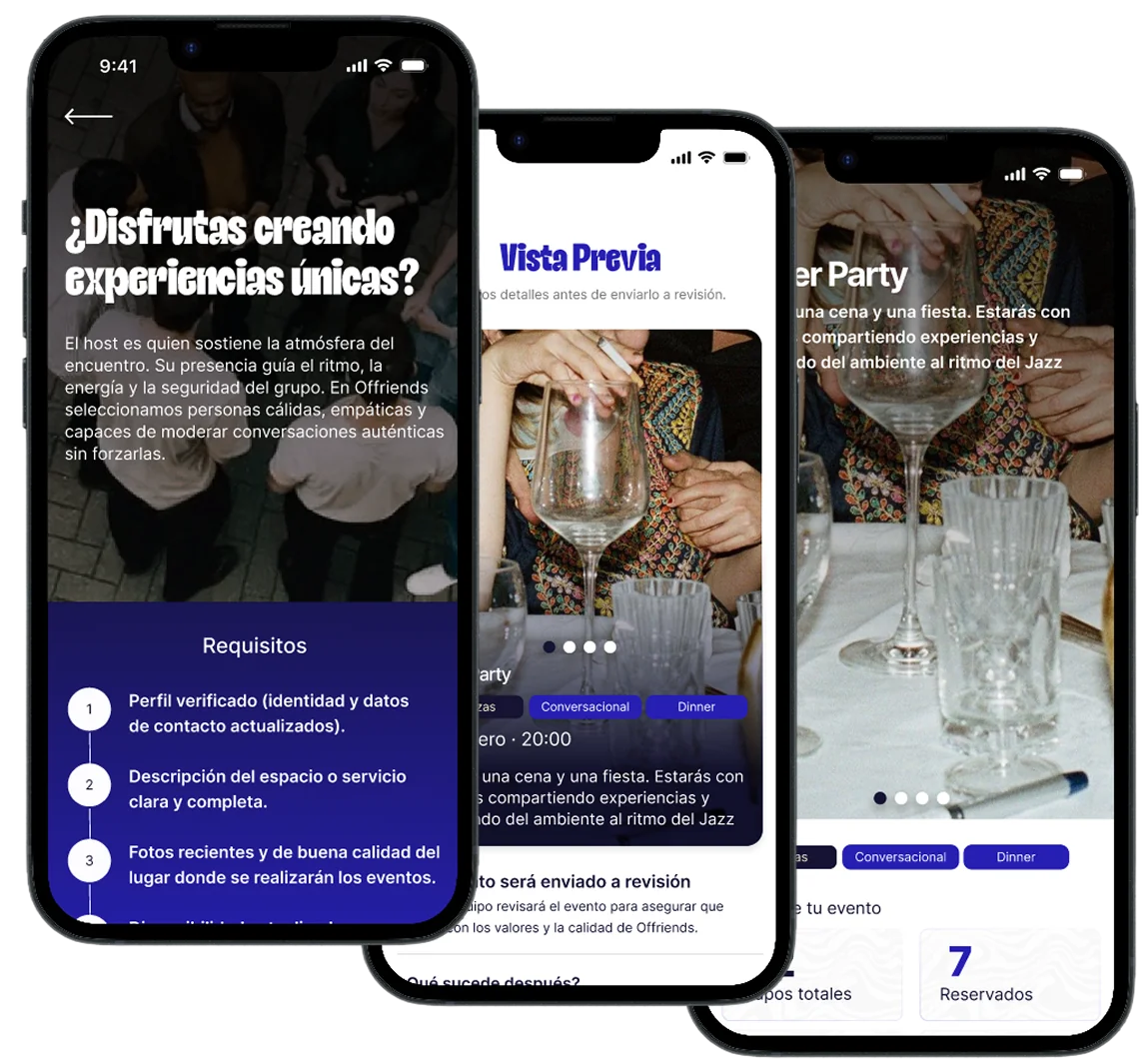
The reasoning: one low-quality event doesn't just disappoint one user. It damages what every future user expects when they pay €45 for a curated evening.
The trade-off is deliberate: slower early growth in exchange for a quality floor that justifies the premium positioning.
The signup flow collects five inputs before showing content, including social energy: how the user prefers to interact within a group. Two people can share every interest and still be incompatible in the same room. The trade-off is a longer onboarding. The solution is a "Skip" button on every step. The risk: incomplete profiles generate lower-quality matches, which undermines the premise. How to validate: compare retention after the first event between users who completed full onboarding vs. those who skipped. If completion of the social energy step correlates with return attendance, the friction is justified. If not, it needs to be rethought.
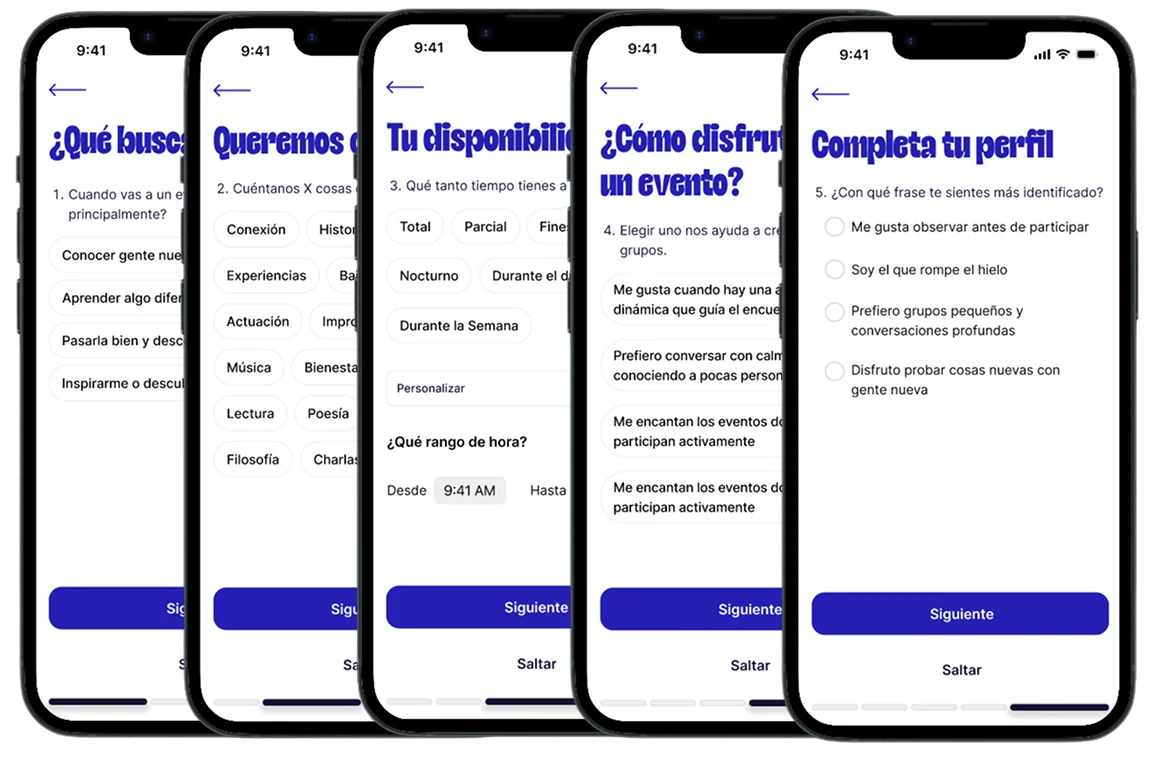
The trade-off is a longer onboarding. The solution is a "Skip" button on every step. The risk: incomplete profiles generate lower-quality matches, which undermines the premise. How to validate: compare retention after the first event between users who completed full onboarding vs. those who skipped. If completion of the social energy step correlates with return attendance, the friction is justified. If not, it needs to be rethought.
Offriends charges a fee if a user doesn't cancel with enough notice. A host organizing a dinner for 12 people can't absorb three no-shows the night before. The hypothesis: a financial stake at the moment of booking is more effective than a reminder notification the night before, because it changes the commitment upfront. How to test: run a cohort without the fee and compare no-show rates. If the difference isn't significant, the friction is costing activation without delivering the benefit.
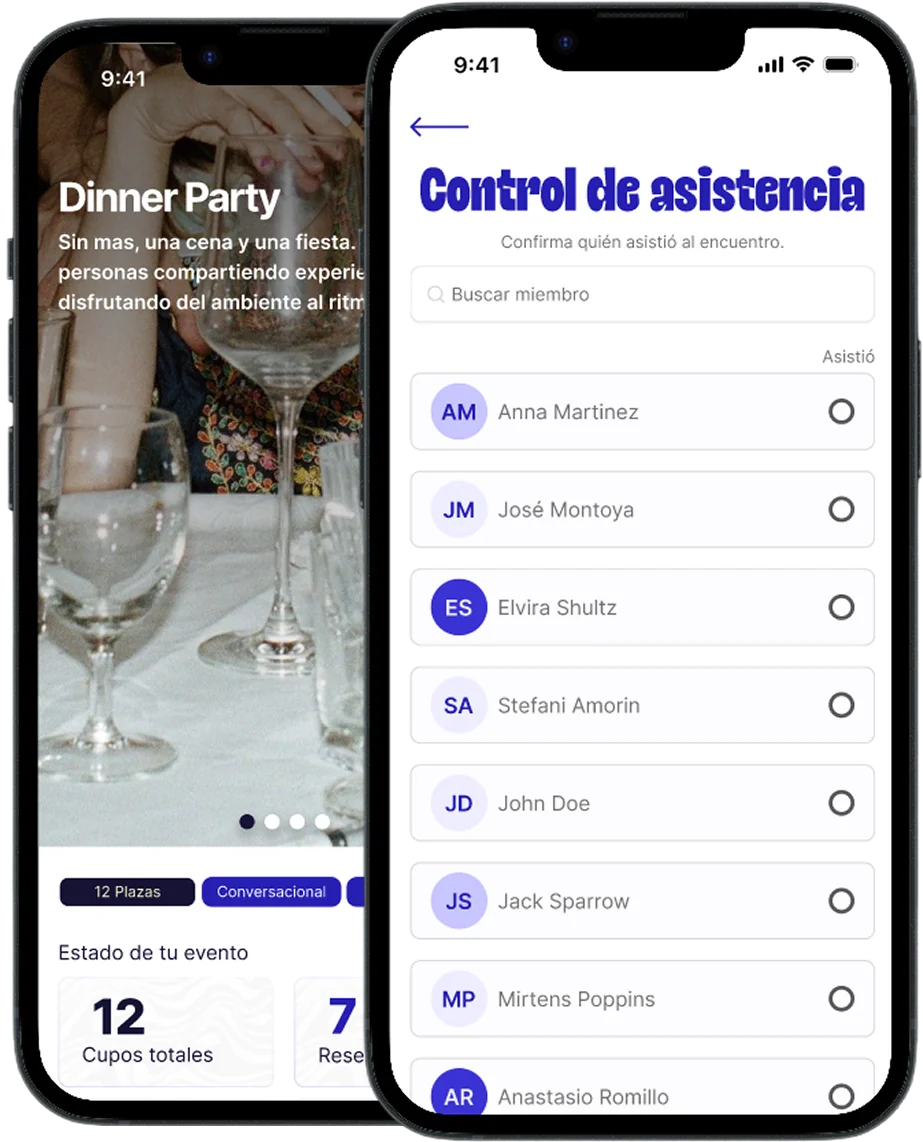
The hypothesis: a financial stake at the moment of booking is more effective than a reminder notification the night before, because it changes the commitment upfront.
How to test: run a cohort without the fee and compare no-show rates. If the difference isn't significant, the friction is costing activation without delivering the benefit.
🔁
The first event is easy to sell. The second means the experience actually worked
Core KPI🚫
Primary indicator of whether the commitment mechanism is functioning. Target: below 10%
Health signal⏱️
Measures whether onboarding and matching surface events fast enough to retain users after signup.
Activation speed🏠
If hosts don't return, supply degrades regardless of user demand. The supply side is the platform.
Supply healthThe 20% commission rate is benchmarked against curated experience platforms operating in the same premium segment: Airbnb Experiences charges hosts 20%, Fever charges between 20-25%.
For a €45 average ticket, this translates to €9 per booking retained by the platform, consistent with what the market accepts for a curated, quality-controlled supply.
All projections are based on 600 active users in year 1 (5% of the ~12,000 addressable users in Barcelona) and 50 active hosts.
| Revenue stream | Basis | Annual |
|---|---|---|
| Booking commission (20%, source: Airbnb Experiences, Fever) | 600 users × 1.5 events/mo × €9 × 12 | €97,200 |
| Premium membership (€12/mo, 40% conversion) | 240 users × €144/yr | €34,560 |
| Host visibility payments | 15 hosts × €75/mo × 12 | €13,500 |
| Total projected | €145,260 |
The real design challenge isn't the review duration. A well-structured host creation flow means review takes minutes, not days. The template does the quality work upfront by making sure hosts fill it out completely and correctly the first time. For scale, the solution is a tiered trust system. New hosts go through full review. After three or more events with strong attendance and ratings, they earn verified status with expedited review or conditional auto-approval. This creates an incentive loop: quality behavior is rewarded with less friction, which makes hosting more attractive for the people already doing it well. The hosts most likely to lower the bar never earn verified status. The platform still sets the standards. Proven hosts just move faster within them.
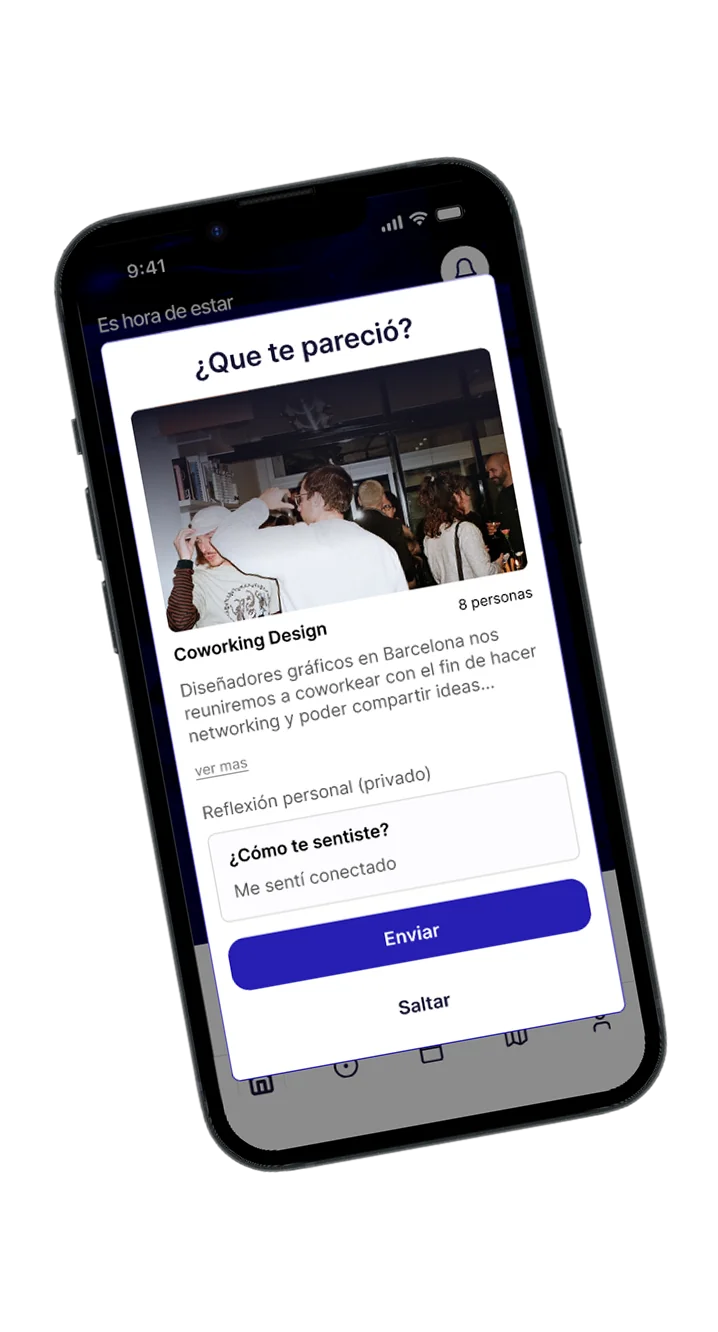
In a premium product, friction that's well-communicated can increase perceived value rather than reduce it. It's not the same to say "we're processing your request" as "we're making sure the community you're joining is worth joining." The mechanism is the same, but the story around it is different.
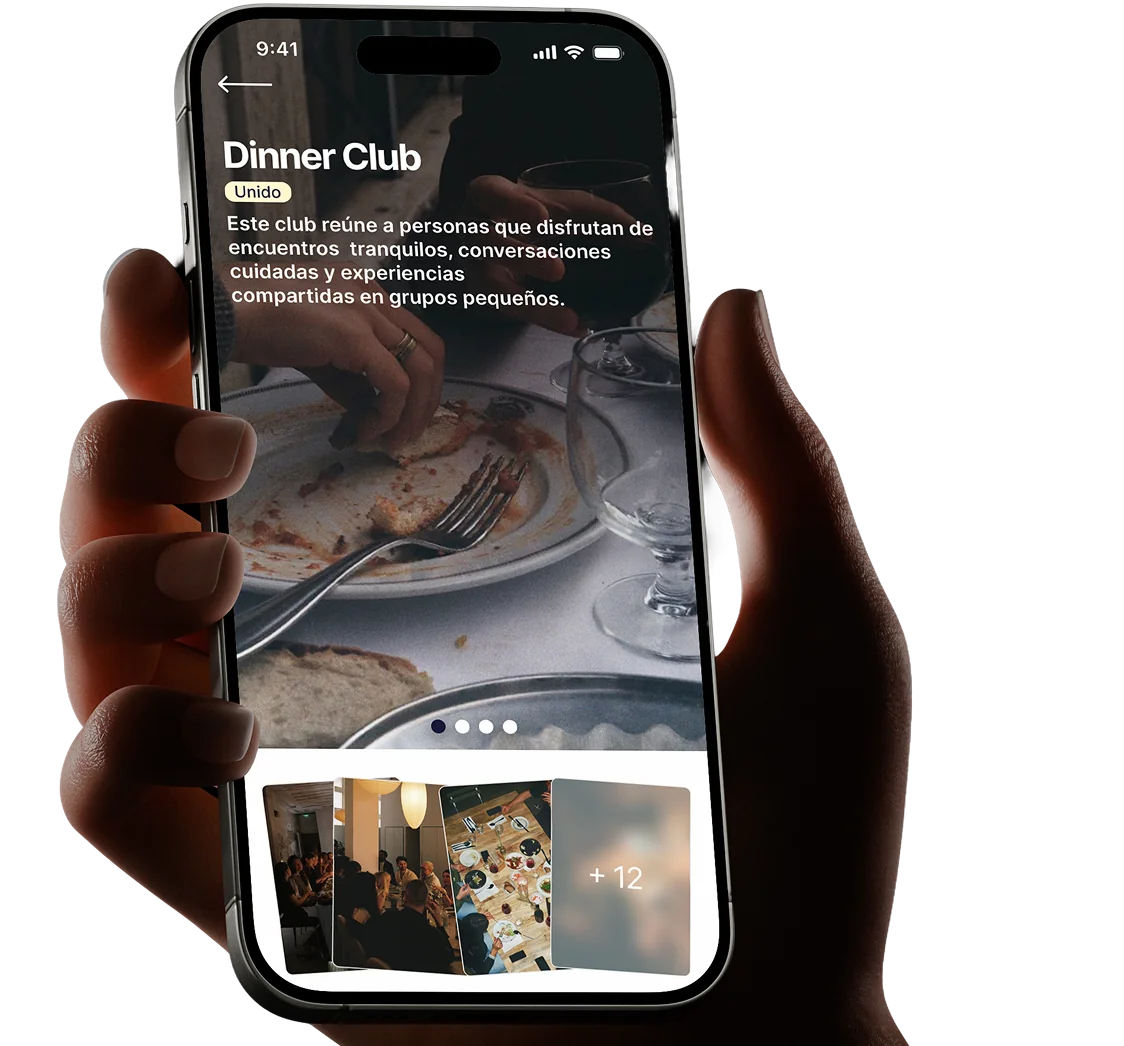
More